Posted by Parivar IPTV
Filed in Entertainment 4 views
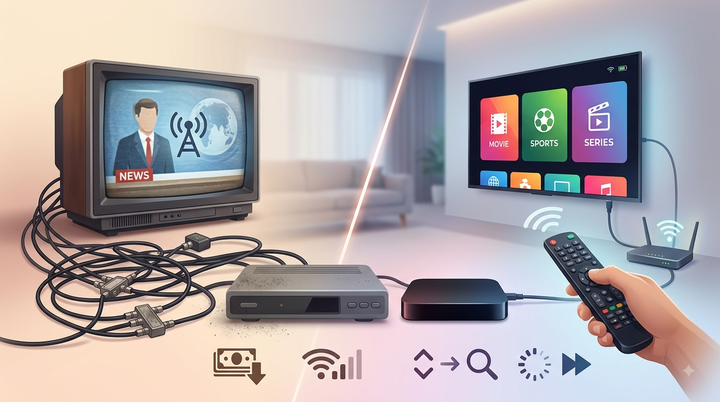
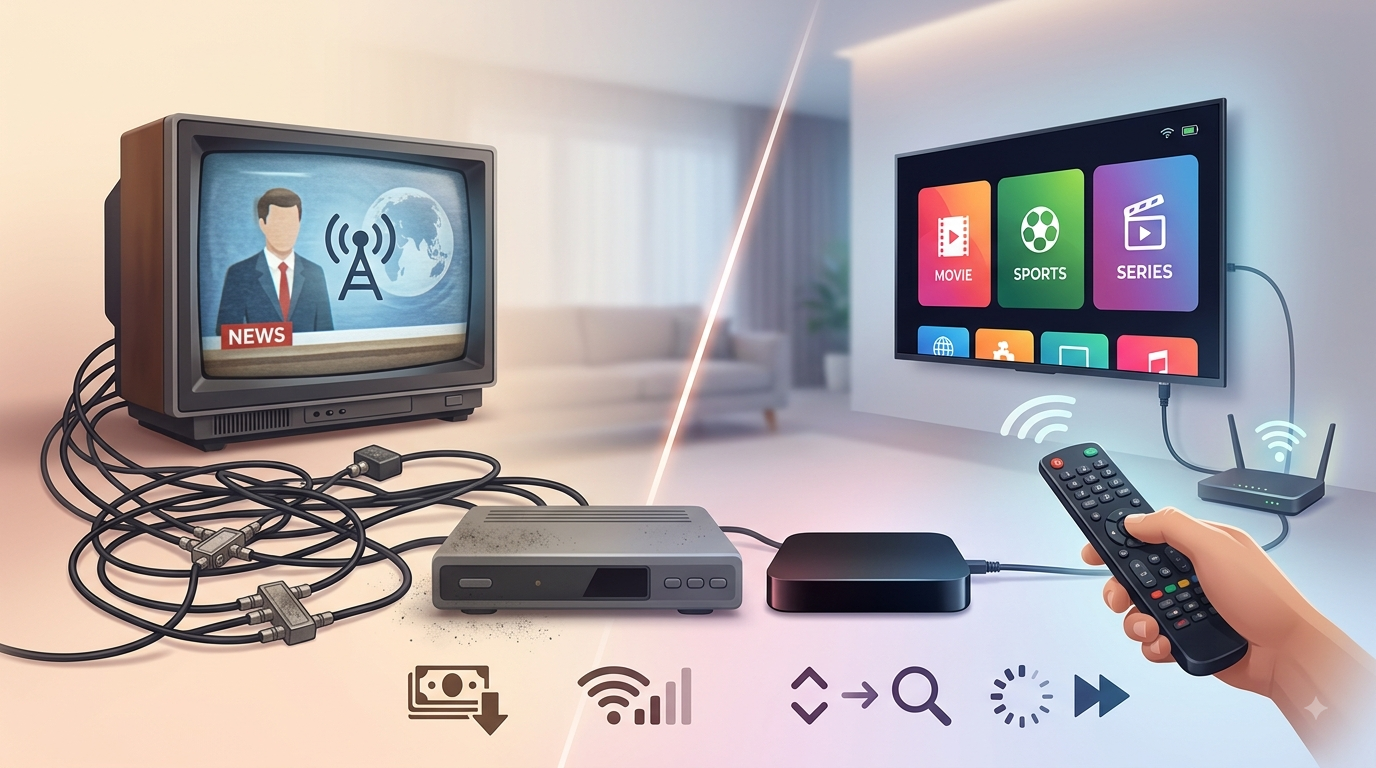
Television viewing has changed significantly as internet technology has become part of everyday entertainment. Traditional cable television is still used by many households, but IPTV has become an increasingly popular alternative for viewers who want more flexibility, digital features, and access to television through an internet connection.
Switching from cable to IPTV can provide advantages such as access to live channels, on-demand programming, multiple compatible devices, and modern content-navigation features. However, IPTV also works differently from cable, so there are several important things to understand before making the change.
If you are researching Parivar IPTV, it is useful to understand how IPTV works, what equipment you may need, how much internet speed is appropriate, and what features to compare before choosing a service. An Indian IPTV Set Top Box can also be part of a dedicated IPTV setup for viewers who prefer watching internet-based television on a traditional TV screen.
Here is what you should know before switching from cable to IPTV.
IPTV stands for Internet Protocol Television. It refers to television content delivered through an IP-based network, generally using an internet connection.
Unlike traditional cable television, IPTV does not depend on a dedicated cable TV signal reaching your home. Instead, compatible television content is delivered through your internet connection and displayed through a supported device.
Depending on the service, IPTV can provide:
The exact selection depends on the provider, location, subscription plan, and content rights.
One of the main reasons viewers consider IPTV is flexibility.
Cable television typically provides a predefined channel lineup delivered through a traditional cable connection. IPTV can combine live television with internet-based features that make content easier to access and navigate.
Viewers may also have more device choices. Depending on the provider, IPTV can work with Smart TVs, set-top boxes, smartphones, tablets, computers, and other compatible streaming devices.
This can be particularly useful for modern households where family members use multiple screens.
The most important thing to understand before switching to IPTV is that your internet connection becomes part of your television system.
Cable television can continue working even when your household internet service has problems because traditional cable TV and internet may use different delivery systems.
With IPTV, however, an internet outage can prevent you from accessing live or on-demand content.
Before switching, check:
A fast connection is useful, but stability is equally important.
The required internet speed depends on video quality and the number of simultaneous streams.
Standard-definition content generally requires less bandwidth than HD, while 4K streaming requires significantly more.
As a general guide, an HD stream may require around 5–10 Mbps depending on the service and compression, while a 4K stream may require 20–30 Mbps or more.
These figures are only general estimates. Actual requirements vary between providers and content.
If several family members use IPTV simultaneously, your household will need enough bandwidth to support all active streams while also handling other internet activities.
Before subscribing, think about how your household watches television.
You may want to use:
Not every IPTV service supports every device.
If you prefer a traditional television experience with a remote control, an Indian IPTV Set Top Box can be a practical option. It can connect a compatible IPTV service to your television and provide a dedicated viewing interface.
Always check compatibility before purchasing hardware.
Do not switch from cable to IPTV based only on the number of advertised channels.
A service may advertise a very large channel lineup, but the more important question is whether it includes the channels you actually watch.
Make a list of your essential channels before choosing a service.
For example, you might prioritize:
Then compare that list with the provider's current lineup.
Regional programming can be an important reason for choosing IPTV.
Indian television includes content in many languages, including Hindi, Tamil, Telugu, Malayalam, Kannada, Bengali, Punjabi, Marathi, and Gujarati.
Viewers living outside India may particularly value access to familiar language programming.
If you are considering Parivar IPTV, review the available Indian and regional content to determine whether it matches your family's interests.
Channel availability can change, so it is always better to check the current lineup rather than relying on outdated advertisements.
Cable television traditionally focuses heavily on scheduled live channels.
IPTV can combine live television with on-demand programming.
With on-demand content, viewers can select available movies, television shows, or other programs instead of waiting for a scheduled broadcast.
Some services may also provide catch-up television, allowing users to watch selected programs after their original broadcast.
However, these features are not universal. Before subscribing, check exactly what the provider includes.
An Electronic Program Guide, or EPG, can make IPTV much easier to navigate.
An EPG displays current and upcoming programming, allowing viewers to see what is playing and what will be broadcast next.
This can be particularly helpful if an IPTV service has a large number of channels.
Instead of scrolling through channels without knowing what is playing, viewers can use the guide to find relevant programs quickly.
If you have a family, this is an important consideration.
Some IPTV subscriptions may allow multiple registered devices but restrict the number of devices that can stream at the same time.
For example, a household may have IPTV applications installed on several compatible devices but only be permitted to use a certain number simultaneously.
Do not assume that one subscription automatically provides unlimited household streaming.
Check the provider's terms before subscribing.
A strong internet plan does not automatically guarantee smooth IPTV streaming.
Your home network also matters.
If the router is far away from the television, thick walls or other obstacles may weaken the Wi-Fi signal.
For stationary devices such as a Smart TV or an Indian IPTV Set Top Box, an Ethernet connection can often provide more consistent network performance than Wi-Fi.
If Ethernet is not practical, improving router placement or using a suitable mesh Wi-Fi system can help extend coverage.
Some internet providers have monthly data allowances.
Streaming video can consume significant amounts of data, particularly when watching HD or 4K content.
If your household watches several hours of IPTV every day, check whether your internet package has a data cap.
This is especially important if multiple people stream simultaneously.
Understanding your internet plan before switching can help you avoid unexpected limitations or additional charges.
Cable television and IPTV can both provide high-quality video, but the actual experience depends on the source and equipment.
IPTV services may offer different resolutions, such as SD, HD, Full HD, or 4K.
Higher resolution can provide sharper images, especially on larger screens.
However, better resolution requires more bandwidth, and not every program is produced or delivered in 4K.
When comparing IPTV services, look at the actual quality of the channels and content you care about rather than simply choosing a service because it advertises "4K."
Before switching, determine whether your existing TV is compatible with your preferred IPTV setup.
A modern Smart TV may support a compatible IPTV application directly.
Older televisions may require a dedicated streaming device or set-top box.
An Indian IPTV Set Top Box can be useful when you want to connect IPTV to a television without relying on built-in Smart TV functionality.
Check the available HDMI or other required connections before purchasing equipment.
Before replacing your cable subscription, carefully review the IPTV provider's terms.
Look at:
A low advertised price does not necessarily mean the service provides the best value.
Consider the complete package and compare it with what you currently receive from cable.
Technical problems can occur with any digital service.
A reliable IPTV provider should offer reasonable support for setup and troubleshooting.
Before subscribing, determine how customers can contact support and what type of assistance is available.
This can be particularly important if you are unfamiliar with IPTV installation.
One of the most important considerations when switching to IPTV is content authorization.
Not every service advertising IPTV has the necessary rights to distribute every channel or program it offers.
Consumers should choose legitimate providers that have appropriate rights to distribute their content.
Avoid services that make unrealistic promises, provide unclear business information, or advertise content without explaining its licensing arrangements.
Cost is one reason people consider switching, but there is no universal answer.
Your total IPTV cost may include:
If you already pay for a reliable broadband connection, switching to IPTV may be financially attractive because you can use your existing internet infrastructure.
However, compare the complete monthly cost rather than comparing the IPTV subscription price alone.
If you are exploring IPTV for Indian and regional entertainment, Parivar IPTV can be included in your research.
Before choosing any provider, compare its current channel selection, supported devices, streaming quality, subscription terms, customer support, and available features.
The goal should not simply be to find the provider with the largest channel count. Instead, focus on whether the service provides the programming and features your household actually needs.
For viewers who prefer watching television on a large screen rather than using a phone or computer, an Indian IPTV Set Top Box can provide a convenient dedicated setup.
The device can connect to the home network and television, allowing compatible IPTV content to be displayed through the TV.
It can be particularly useful for households with older televisions that do not support the required IPTV application.
Always verify that the device is compatible with your chosen service before purchasing it.
There is no single answer for every household.
Cable may be suitable if you have reliable cable infrastructure, limited broadband availability, or prefer traditional television.
IPTV may be more attractive if you already have dependable broadband and want features such as multi-device access, on-demand content, digital program guides, and flexible viewing.
Your choice should depend on:
Internet quality + content requirements + device compatibility + cost + viewing habits
Considering all five factors can help you make a more informed decision.
Before cancelling your cable service, ask yourself:
Is my internet connection fast and stable enough?
Does the IPTV service provide the channels I actually watch?
Can I use IPTV on my preferred television or set-top box?
Does the service provide the live, VOD, EPG, and catch-up features I need?
Can enough devices stream at the same time?
Have I calculated the total monthly cost, including internet and equipment?
Does the provider have appropriate rights to distribute its content?
If the answers are satisfactory, switching may be worth considering.
Switching from cable to IPTV can provide a more flexible approach to modern television, but it is important to understand the differences before making the change. IPTV depends on your internet connection, requires compatible equipment, and may have different rules for devices and simultaneous streaming.
At the same time, IPTV can provide useful advantages such as live channels, on-demand content, regional programming, electronic program guides, multi-device access, and flexible viewing options.
For viewers researching Parivar IPTV, carefully compare the available content, features, device compatibility, subscription conditions, and content authorization. An Indian IPTV Set Top Box can also be a convenient solution for viewers who want a dedicated IPTV experience on their television.
The best approach is to evaluate your internet connection, viewing habits, household requirements, and budget before cancelling cable. With the right service, compatible equipment, and reliable network, IPTV can become a practical part of a modern home entertainment setup.